
Certificates of analysis turn up constantly in this field — attached to regulatory filings, quoted in enforcement letters, reproduced in litigation exhibits, and posted online by people who assume the document settles an argument. It usually doesn't. A COA is a summary of specific tests run on a specific material at a specific time, and it is silent on everything it did not test.
This piece is about reading the document. It is not a guide to obtaining material, commissioning testing, or handling anything; we do not publish that and will not help with it. What follows applies equally to a COA in a court exhibit and a COA in a scientific supplement.
Which compounds this applies to
- Approved drug products
- Certificates here sit inside a regulated quality system: validated methods, pharmacopeial specifications, inspected manufacturing, and batch records an agency can demand. The document is one artefact of a larger apparatus.
- Compounds in active clinical trials
- Investigational material is produced under defined manufacturing standards for the trial, with specifications agreed as part of the regulatory submission. Being in trials is a statement about an open research question, not a quality claim.
- Compounds with no approval and no completed human trials
- Here a certificate stands alone, with no inspection regime, no pharmacopeial monograph, and nothing external to check it against. A document cannot substitute for the system it is meant to summarise — which is the central point of this piece.
What a purity figure is a figure about
The number most people look at first is a purity percentage from high-performance liquid chromatography — typically reversed-phase HPLC for a peptide. The method separates components of a mixture by how strongly they interact with a stationary phase, and a detector records what comes off the column and when. The purity figure is almost always an area percentage: the area under the main peak divided by the total area of all detected peaks.
That framing carries three limits worth naming. First, it is relative, not absolute. It tells you the proportion of what the detector saw, not the proportion of what was in the vial. Second, detection is usually by UV absorbance at a wavelength chosen for the target; a contaminant that absorbs weakly at that wavelength contributes little area and shrinks toward invisibility. Third, anything that does not elute from the column — material that stays bound, or aggregates that never make it on — is not in the denominator at all.
None of that makes the number worthless. It makes it a number about chromatographic behaviour under one set of conditions. Method conditions, column, gradient, and detection wavelength should be stated on the certificate. If they aren't, the purity figure is uninterpretable, whatever it says.

Identity is a different question from purity
Mass spectrometry usually appears next, and it answers a different question: is this the molecule the label claims? An observed mass matching the theoretical monoisotopic or average mass of the intended sequence is good evidence for identity. Tandem MS, which fragments the molecule and reads the pieces, goes further and can support the sequence itself.
But a mass match is a statement about mass. Isomers — same formula, different arrangement — can share a mass. Stereochemistry, including racemisation at individual residues, is largely invisible to a simple mass measurement. And a correct identity says nothing whatsoever about whether the material is sterile, whether it contains bacterial endotoxin, or what the remaining percentage consists of. Identity, purity, and safety are three separate axes. A certificate can be excellent on one and silent on the others.
Careful reader
When a document reports a result, ask what the negative case would have looked like. If a test could not have produced a failing result under the conditions used — wrong wavelength, wrong mass range, a specification wide enough to pass anything — then a passing result carries no information. This is the same habit that makes an underpowered clinical trial's null result uninformative, applied to a lab report.
Lot-specific, or merely representative
This is the distinction that does the most work and gets the least attention. A lot-specific certificate reports tests run on the identified batch: it carries a lot or batch number, a manufacture or test date, and results traceable to that material. A representative or typical certificate reports results from some earlier batch, or a composite, and is offered as an illustration of what the product generally looks like.
The two documents can be laid out identically. The words that distinguish them — "representative," "typical," "for illustration" — are usually in small type near a header, and a certificate with no lot number and no date should be read as representative by default. A representative COA tells you about a batch that is not the batch in front of you, which for most purposes means it tells you nothing about the batch in front of you.
Accreditation, sterility, and what is simply absent
"Third-party tested" is a marketing phrase, not a technical one. The technical claim is accreditation: a laboratory assessed by a recognised accreditation body against ISO/IEC 17025 for competence in named methods within a defined scope. That scope matters. A laboratory accredited for chromatographic assay is not thereby accredited for microbiological testing. Accreditation also certifies competence and quality systems — it does not certify that any particular result is correct, and it says nothing about chain of custody or whether the sample tested was drawn from the batch in question.
Sterility and endotoxin are separate again, and separate from each other. A sterility test asks whether viable organisms can be recovered under specified culture conditions. An endotoxin test asks whether lipopolysaccharide fragments — which are not alive and survive processes that kill the bacteria that produced them — are present above a limit. A material can pass sterility and fail endotoxin. Both are microbiological tests, run under their own pharmacopeial chapters, and neither is implied by a chromatographic purity figure.
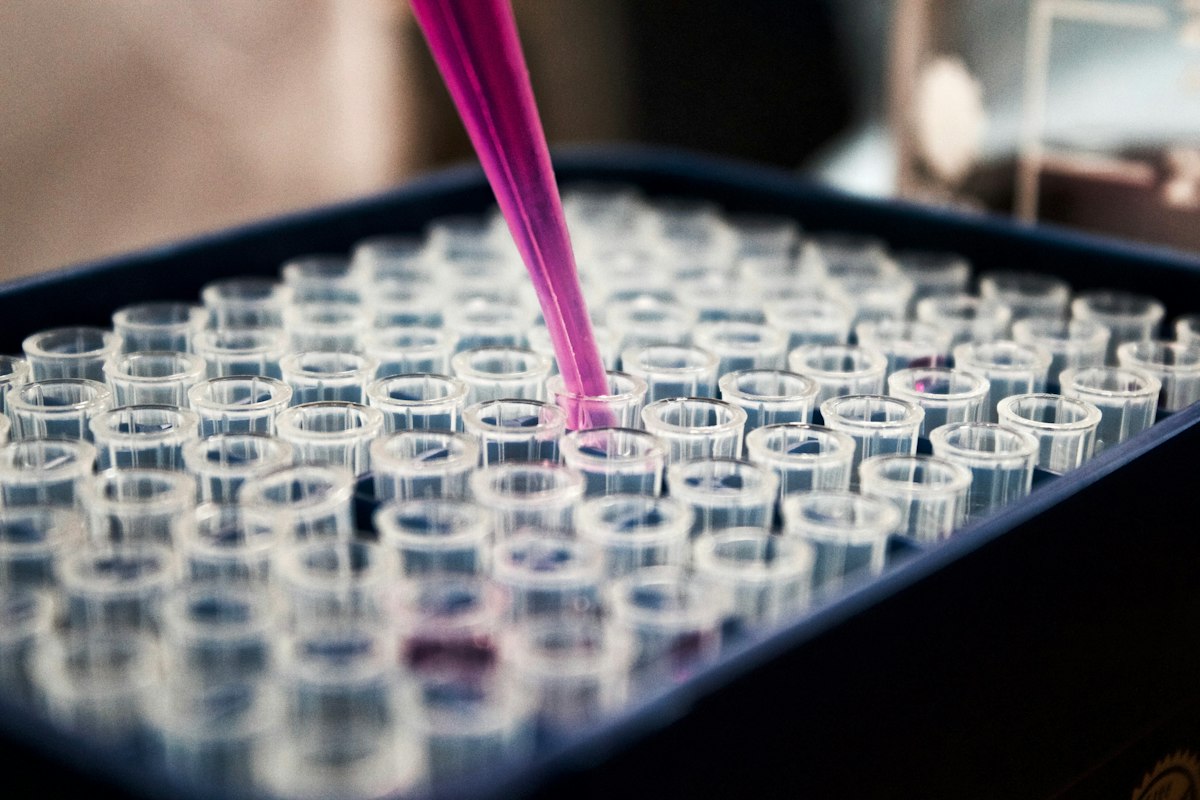
The most useful habit is to read a certificate for its absences. What was not tested? What was tested against a specification so wide it could not fail? Which lot does this actually describe? A document that answers those questions well is doing its job. A document that looks authoritative while leaving them open is doing something else — and no reader, however careful, can close that gap by reading harder.
Sources
- United States Pharmacopeia, General Chapter <621> Chromatography, current revision. Reference
- United States Pharmacopeia, General Chapter <71> Sterility Tests and General Chapter <85> Bacterial Endotoxins Test, current revisions. Reference
- International Council for Harmonisation, Q6B: Specifications — Test Procedures and Acceptance Criteria for Biotechnological/Biological Products, 1999. Reference
- International Organization for Standardization and International Electrotechnical Commission, ISO/IEC 17025:2017 — General requirements for the competence of testing and calibration laboratories. Reference
- U.S. Food and Drug Administration, Guidance for Industry: Analytical Procedures and Methods Validation for Drugs and Biologics, 2015. Reference
- Reviews of peptide impurity profiling by liquid chromatography–mass spectrometry, Journal of Pharmaceutical and Biomedical Analysis, 2019. Reference
We cite by publication, authorship and year rather than by link. Identifiers are omitted deliberately; see our sourcing hierarchy for why.

Priya Raghunathan, PhD
Science EditorPriya holds a PhD in medicinal chemistry and spent six years in analytical method development before moving into science writing. She edits everything on this site that touches chemistry, and holds no consulting relationships with any testing laboratory or manufacturer.